Quantum Duel Rules
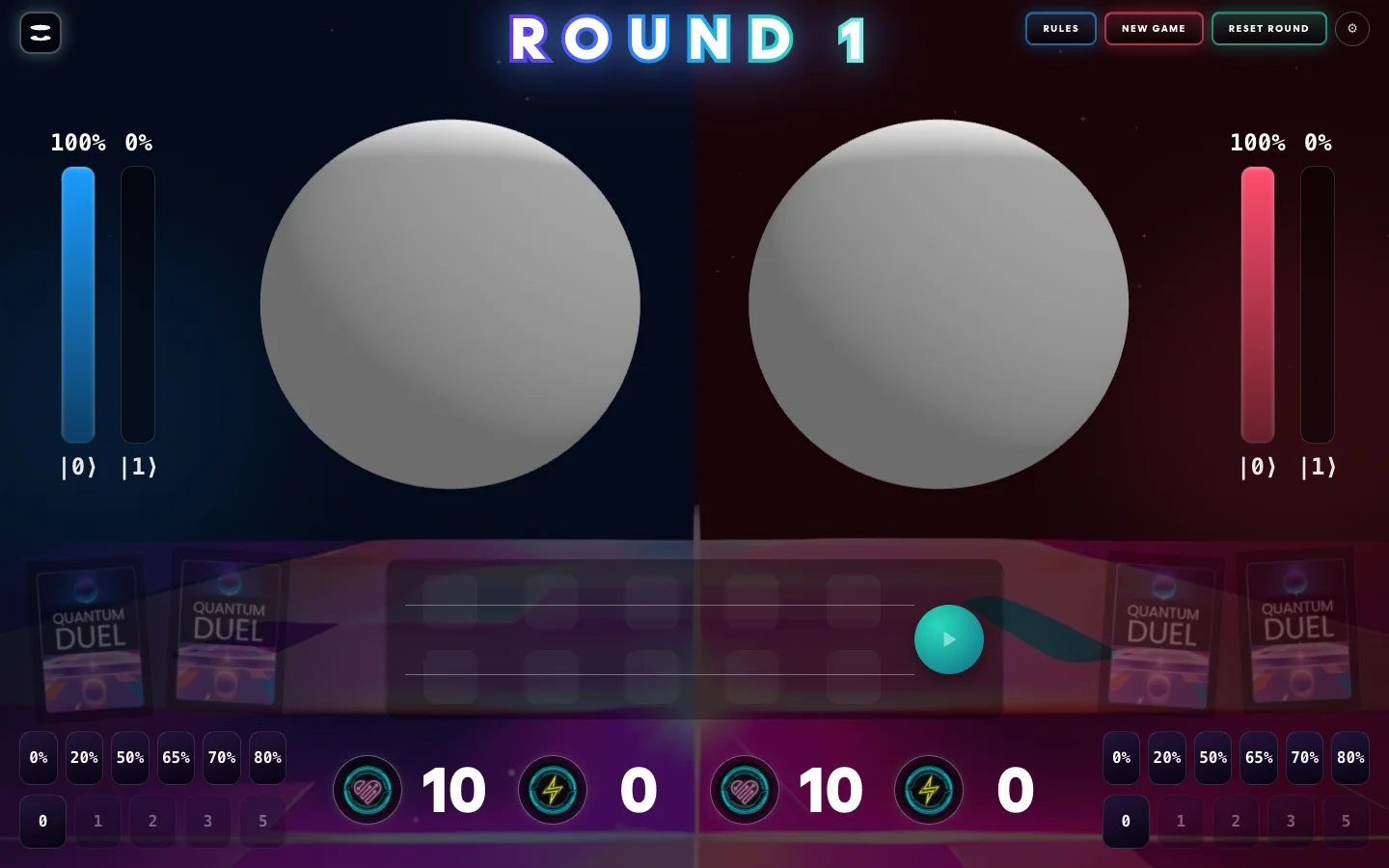 Open the Quantum Duel engine ↗
Quantum Duel is a fast-paced 1v1 strategy card game where you manage resources to attack, defend, and bluff your way to victory. The catch: the game runs on quantum principles.
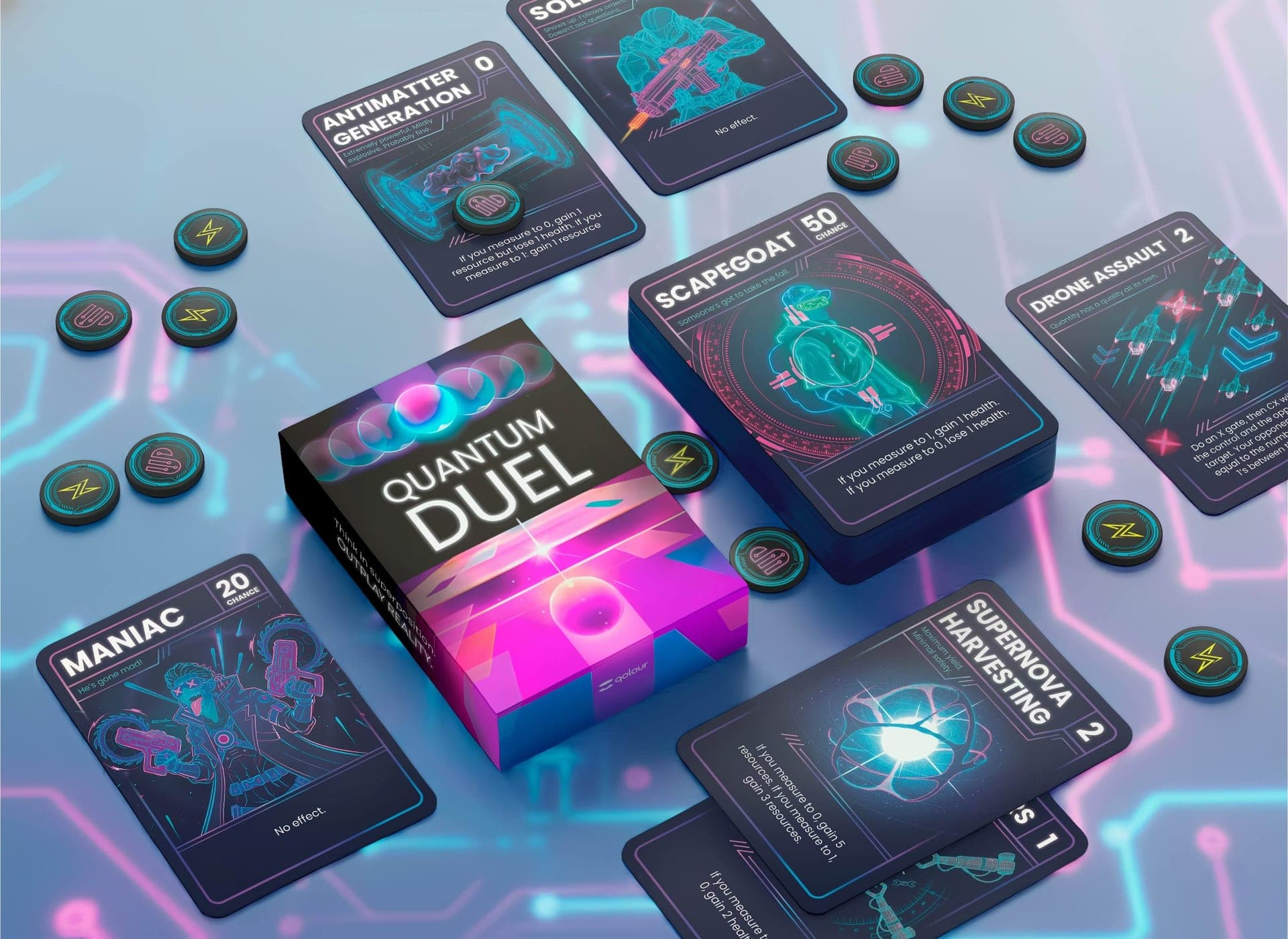
What's in the box
2 sets of 13 action cards
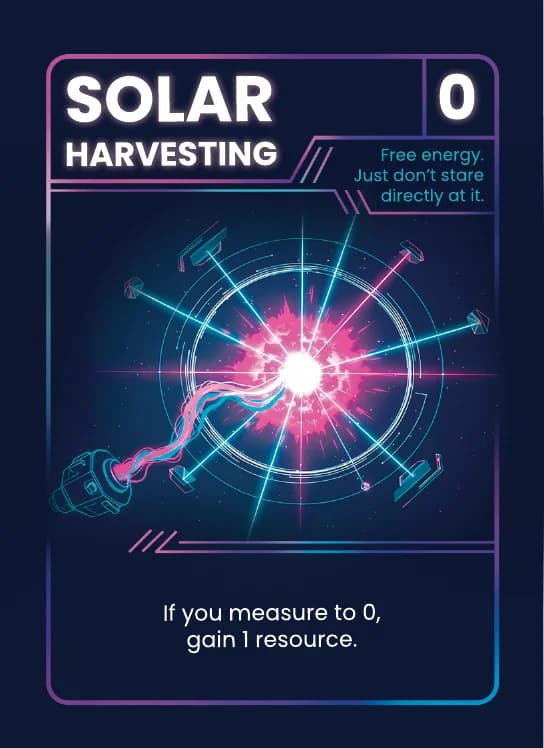
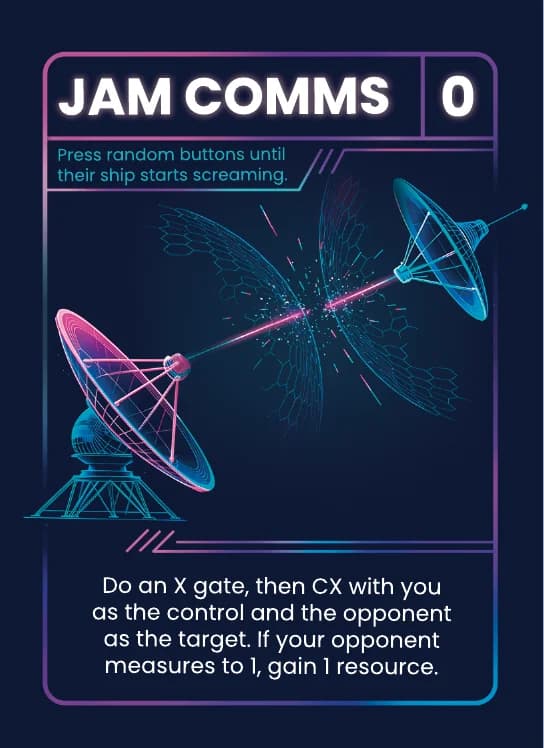
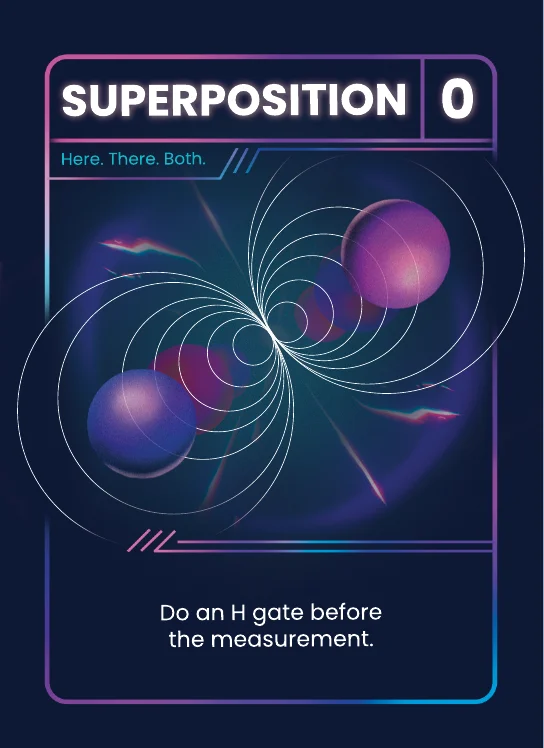
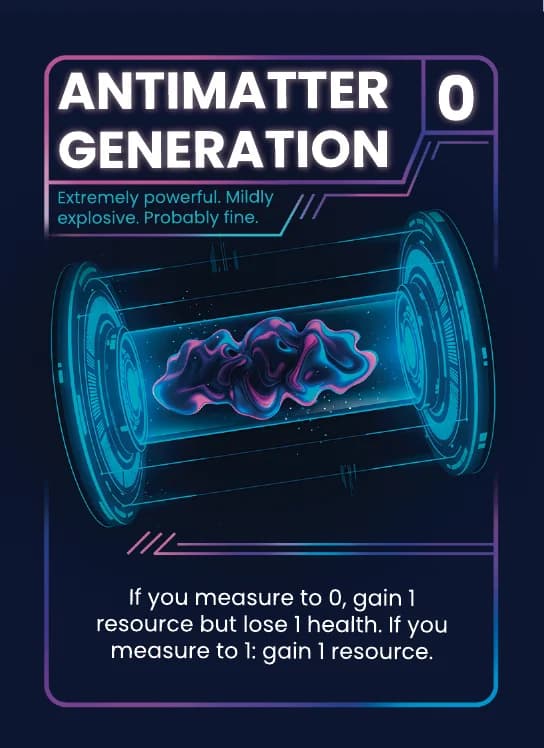
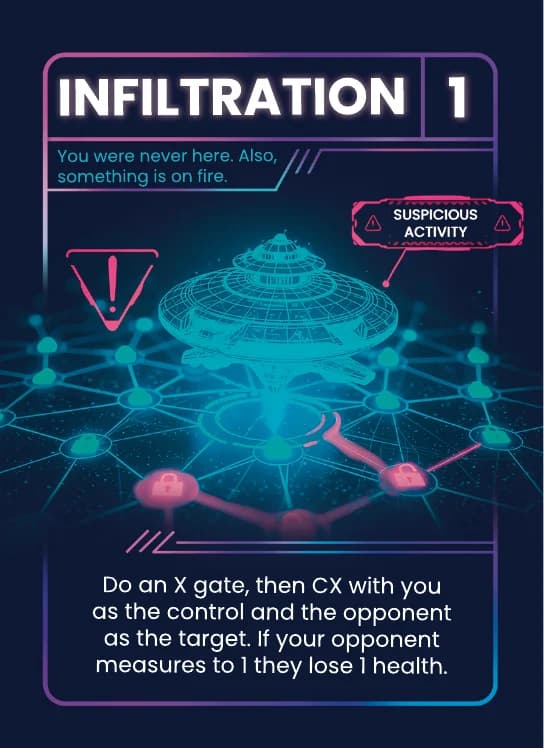
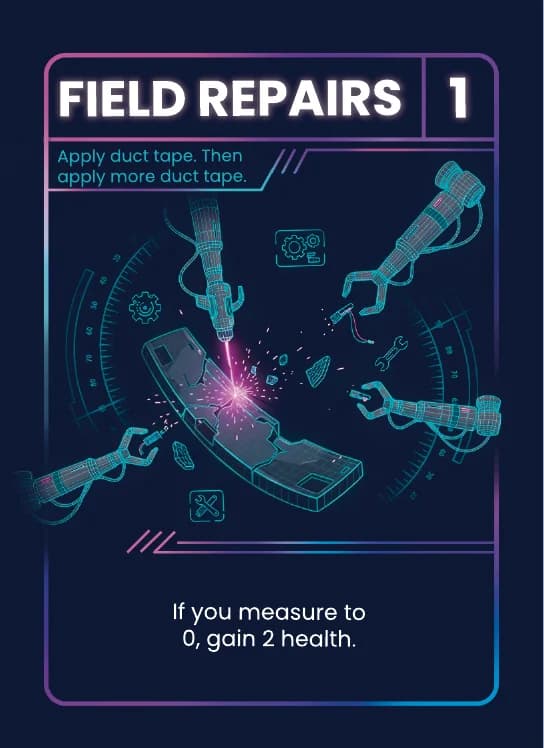
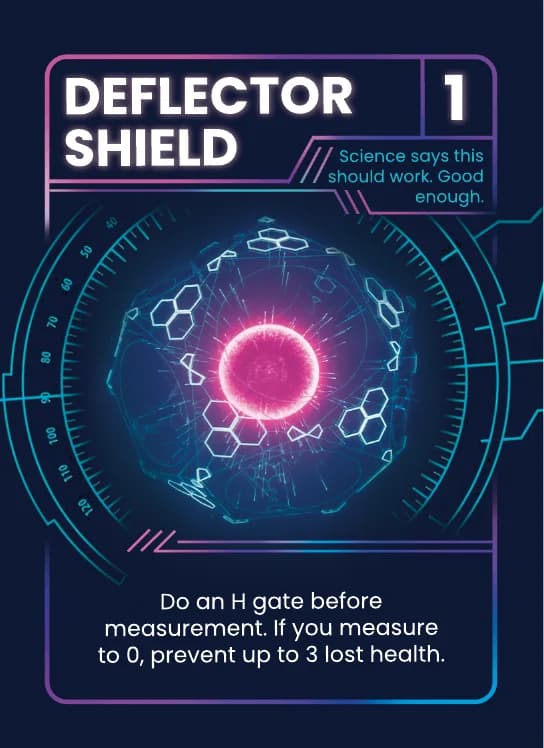
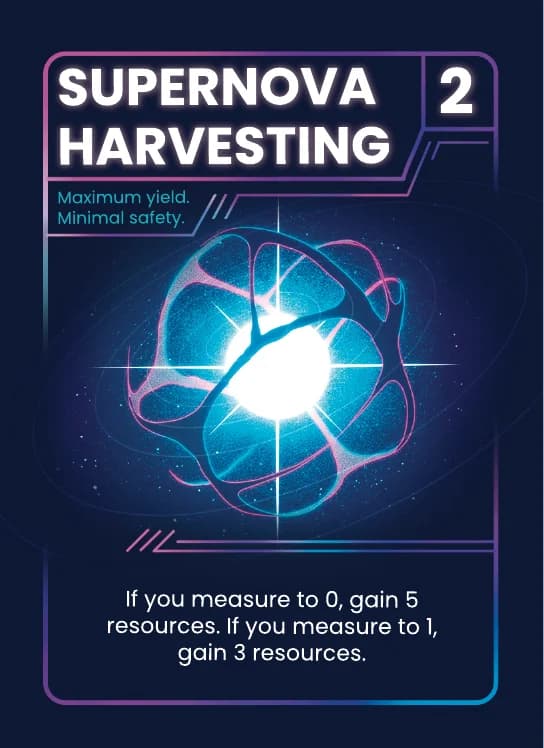
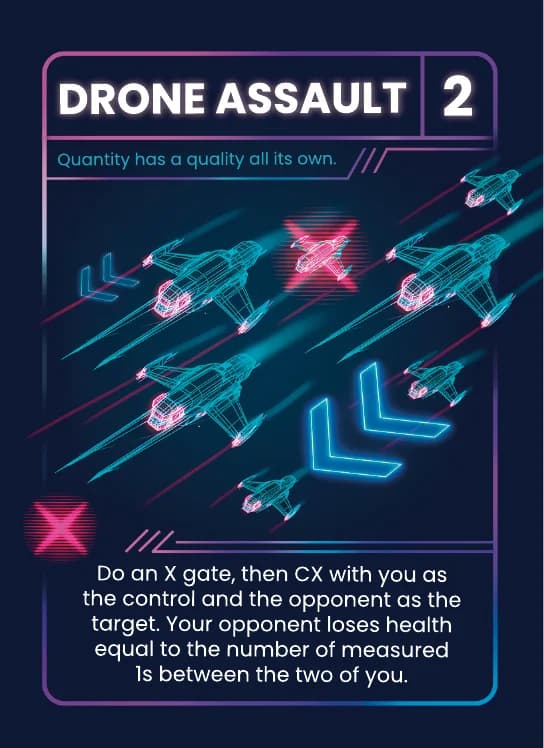
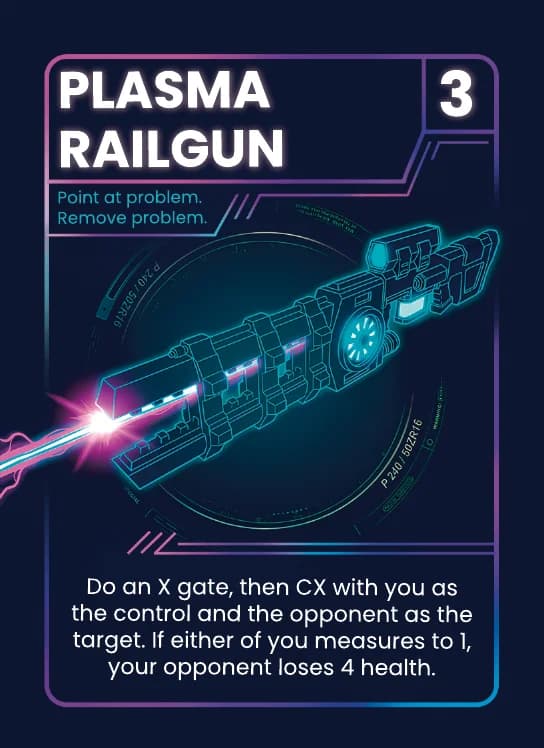
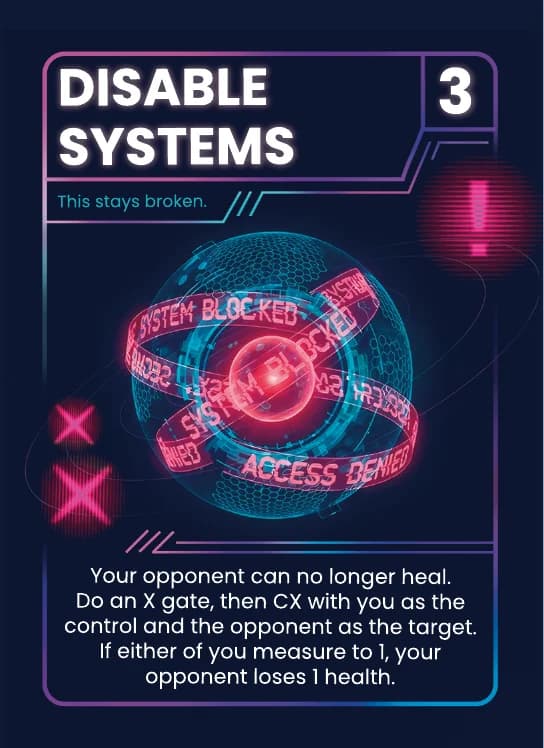
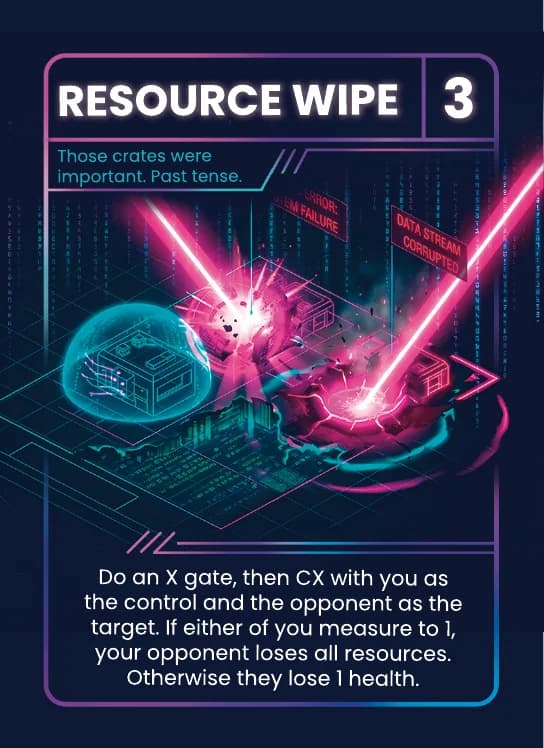
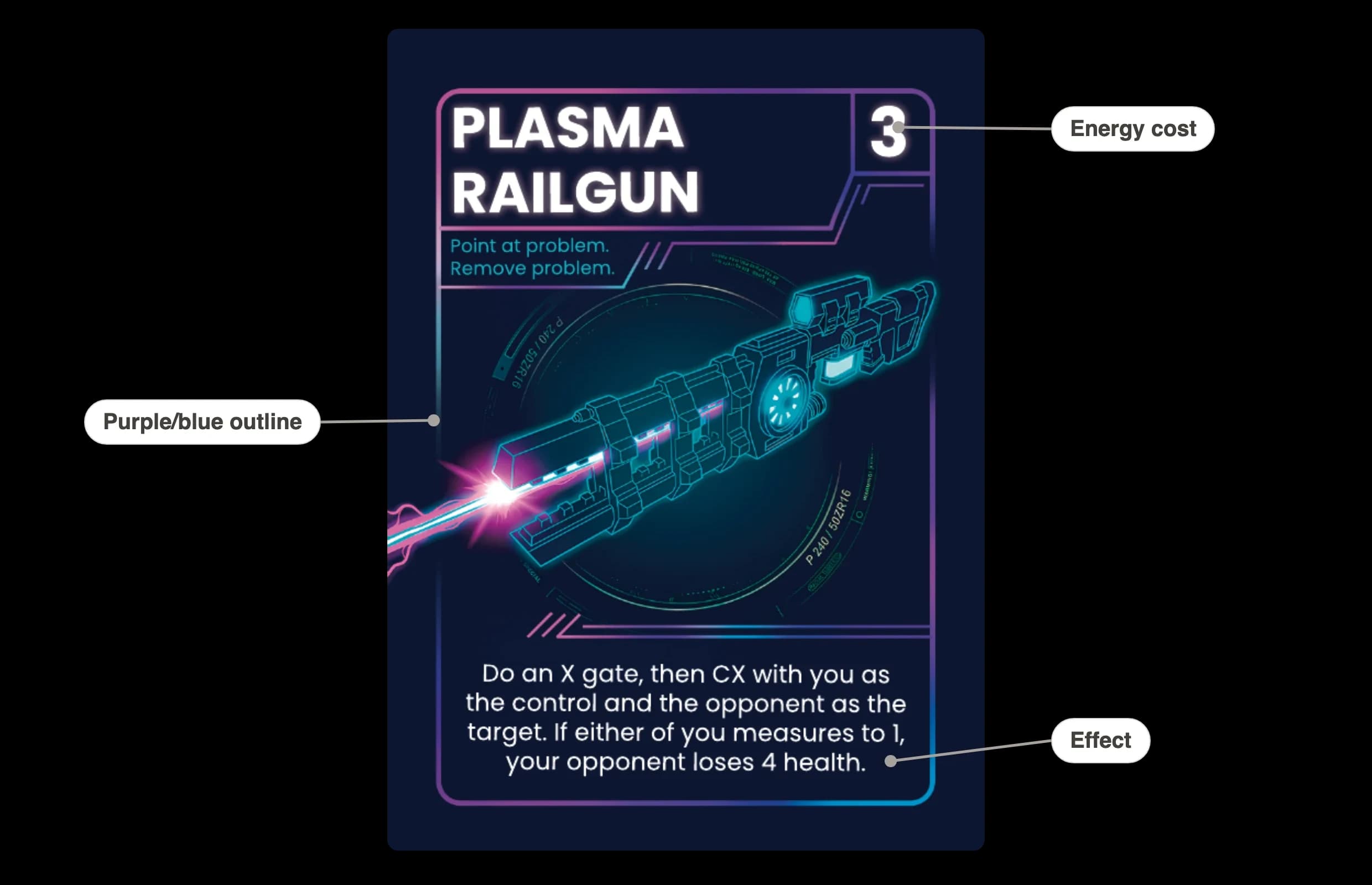
These are the actions you can take each round. Each one has an energy cost in the top right, its effect at the bottom, and a purple/blue outline. In quantum terms, they correspond to quantum operations.
44 shared recruit cards
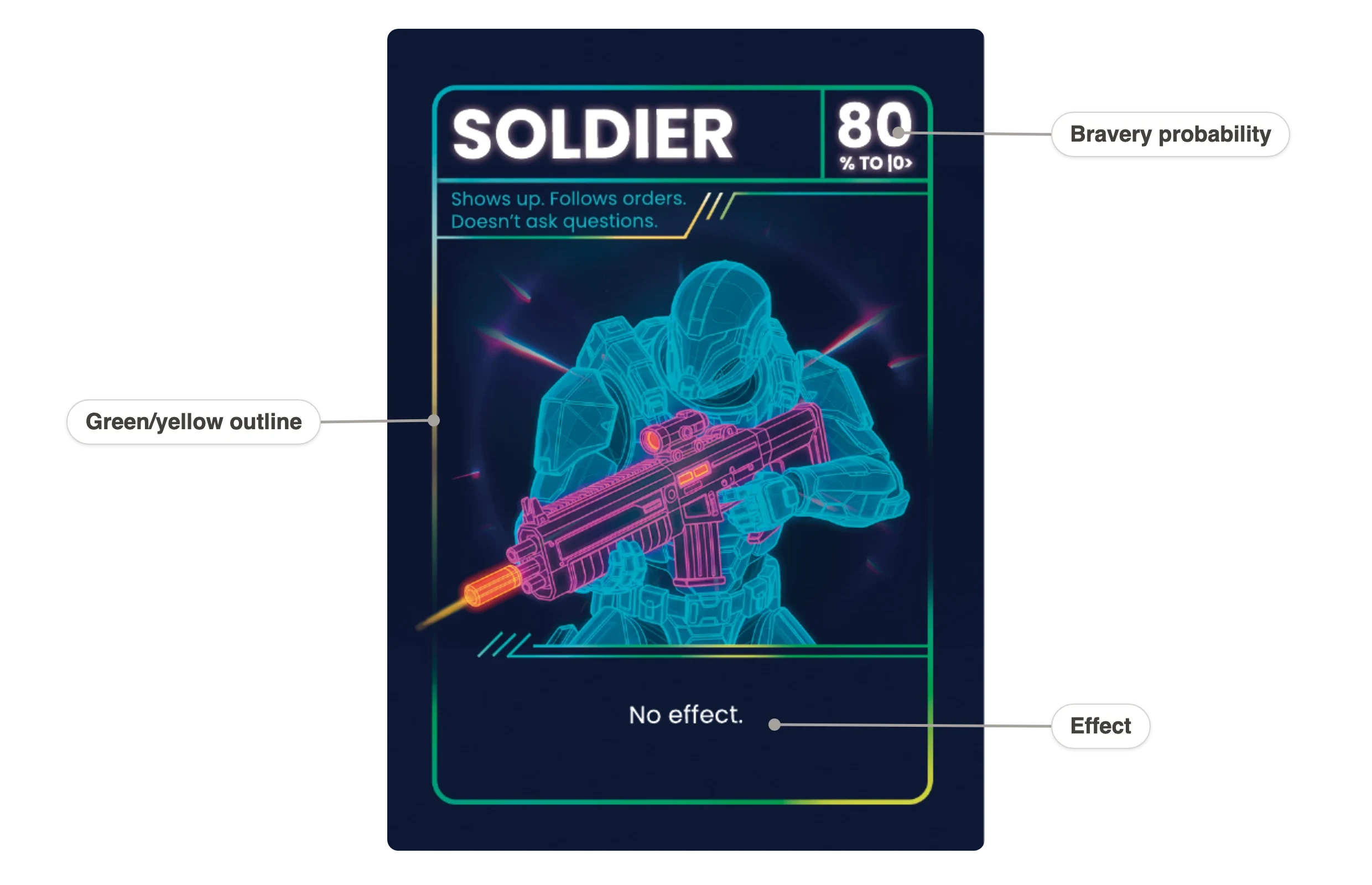
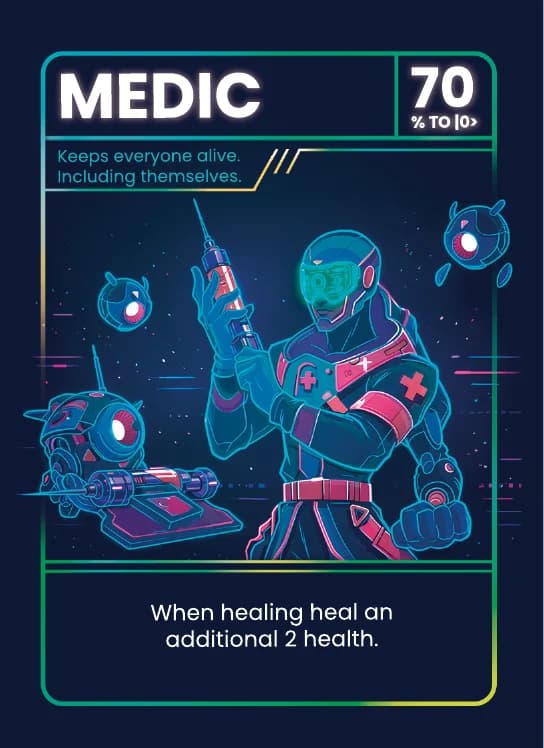
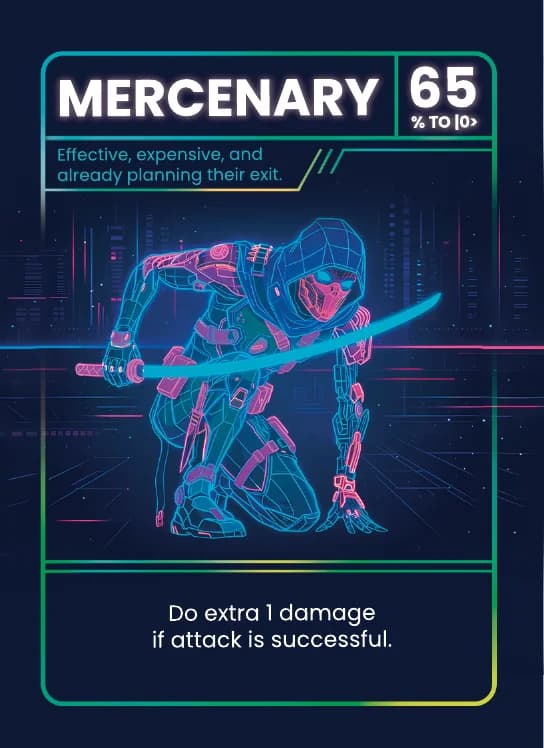
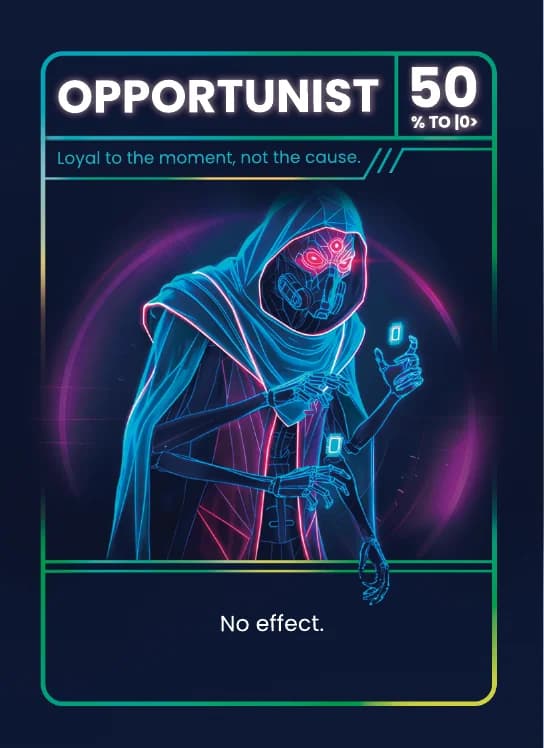
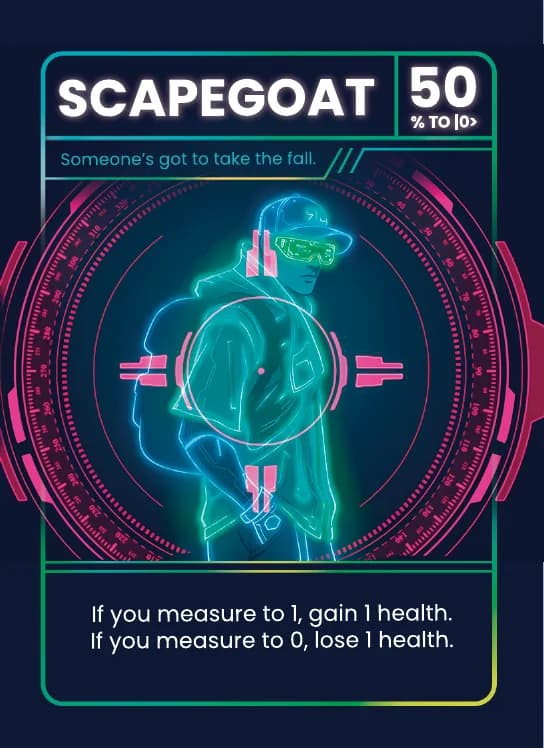
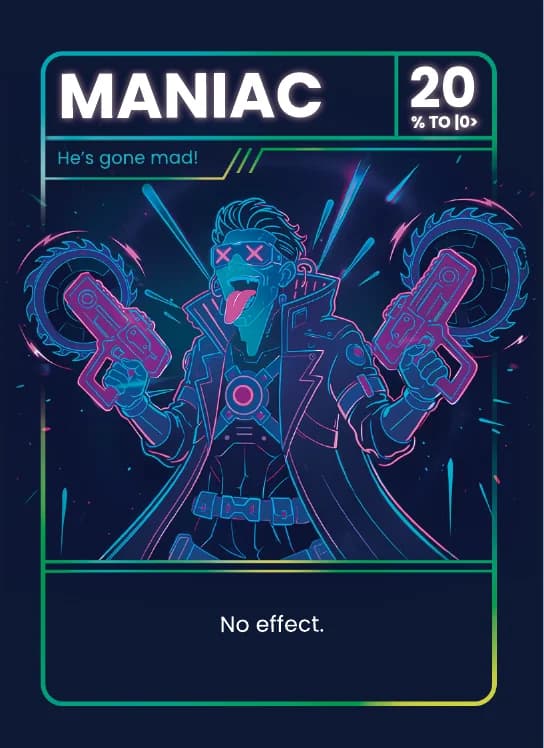
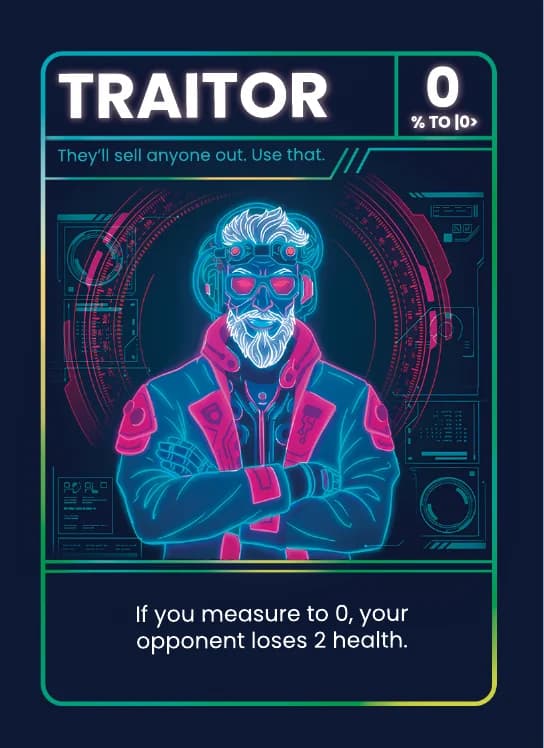
These are the recruits that carry out the action you choose each round. Each one has a “bravery probability” in the top right, its effect at the bottom, and a green/yellow outline. In quantum terms, they correspond to the initial states of the quantum circuit — the probability is the chance of measuring to |0>.
What do you need
- Table space to play the cards.
- A Quantum Duel engine:
- A device running the web-based standalone Quantum Duel engine
- or
- A device running the Qubi App Quantum Duel engine, plus 2 Qubis, for an even cooler experience. PS: with the Qubi App you can not only watch the gameplay on real-life Qubis — you can get a real Quantum Computer involved in the game!
Setup
Find all the action cards (purple/blue outlines). There are 2 copies of each of the 13 cards — one full set per player, laid face up on the table in front of them. Arrange them however you'd like, though sorting by energy cost is recommended.
Actions are available to you at all times, and do not get expended — at the end of each round, return them to their positions.
Then take the rest of the cards — the recruits — and shuffle them into a shared face-down deck that both players will draw from.
Each player draws a hand of 5 cards, kept hidden from the opponent.
Prepare your choice of Quantum Duel engine:
- If using the standalone web app: open it here.
- If using the Qubi App: navigate to Activities → Games → Quantum Duel and connect 2 Qubis.
Gameplay
Each player starts with 10 health and 0 energy. The game is played in rounds, and ends when a player is out of health at the end of a round. The player with health remaining wins!
 10 health
 0 energy
Each round goes like this:
- Each player decides on a pair of cards to play: 1 recruit from their hand and 1 action from the table in front of them. You must have the energy the action requires — on round 1, when both players have 0 energy, only the 0-cost actions can be chosen.
- Once both players have decided, count down together: “3, 2, 1, Go!” On “Go”, both players simultaneously place their chosen recruit on top of their chosen action.
- Input both players' choices into the quantum engine.
- If camera scanning is enabled, just hold the two cards up to the camera with the text visible, and the engine reads them — player 1 first, then player 2.
- If using manual input, click your recruit's probability to find your recruit card, then click your action's cost to find your action card.
- Once both cards from each player are in, the engine builds out the quantum circuit. Hit the green play button to start the evaluation! The Qubis are initialized to the recruits' probabilities (of measuring to
|0>), and then the actions take effect. - At the end of the evaluation, the Qubis are measured and the card effects are executed. Try not to be the first one to lose all your health!
- Each player discards the recruit they used and draws a new one (if the deck runs out, shuffle the discards back in). The action cards go back to their original positions on the table.
Tips and strategies
In general, most card effects besides attacks like to measure to |0> — and a majority of recruits have a 50% chance or better of doing exactly that.
The X CX operation is the game's attacking mechanism. Here's the breakdown:
- X: Flips your qubit, so a high chance of measuring to
|0>becomes a high chance of measuring to|1>. Every attacking card's effect wants your qubit measuring to|1>. - CX: Conditionally flips the opponent's qubit based on your qubit's chance of measuring to
|1>. This is how you mess with your opponent and change the results of their measurements.
H gates combined with a 50% recruit can evade attacks. CX has no effect on a 50% recruit (which sits in the |+> state), and an H afterwards — from your action's effect — brings you to the |0> state.
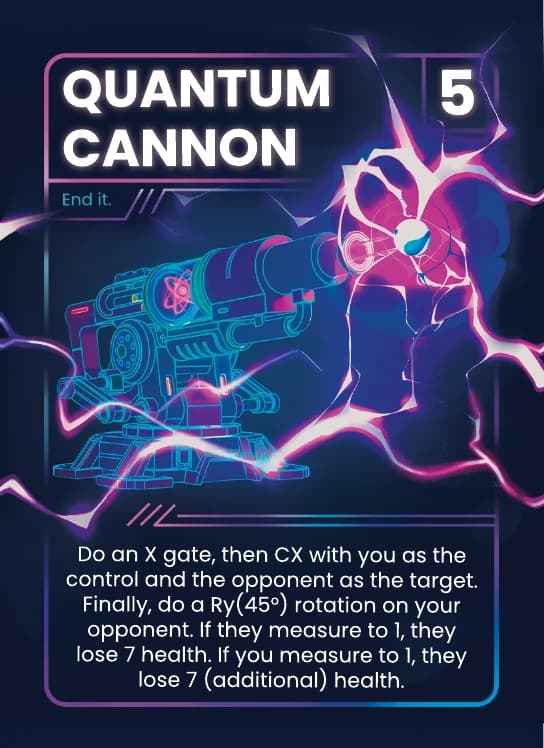
The most powerful card in the game, Quantum Cannon, carries an Ry(45) gate. Before the gate, |+> has a 50% chance of measuring to |1> and |1> a 100% chance. After it, both have an 85% chance. (Picture |+> moving closer to |1> while |1> moves the opposite way.) The net effect: the defensive advantage of the |+> state is nullified.
Have fun, and may the universe be on your side!
The cards
Recruits

Actions